How to Choose the Right Dog Waste Bag for Your Private Label
How to choose a private-label dog waste bag: format, film thickness, material, roll count, core type and dispenser fit, plus sample checks.
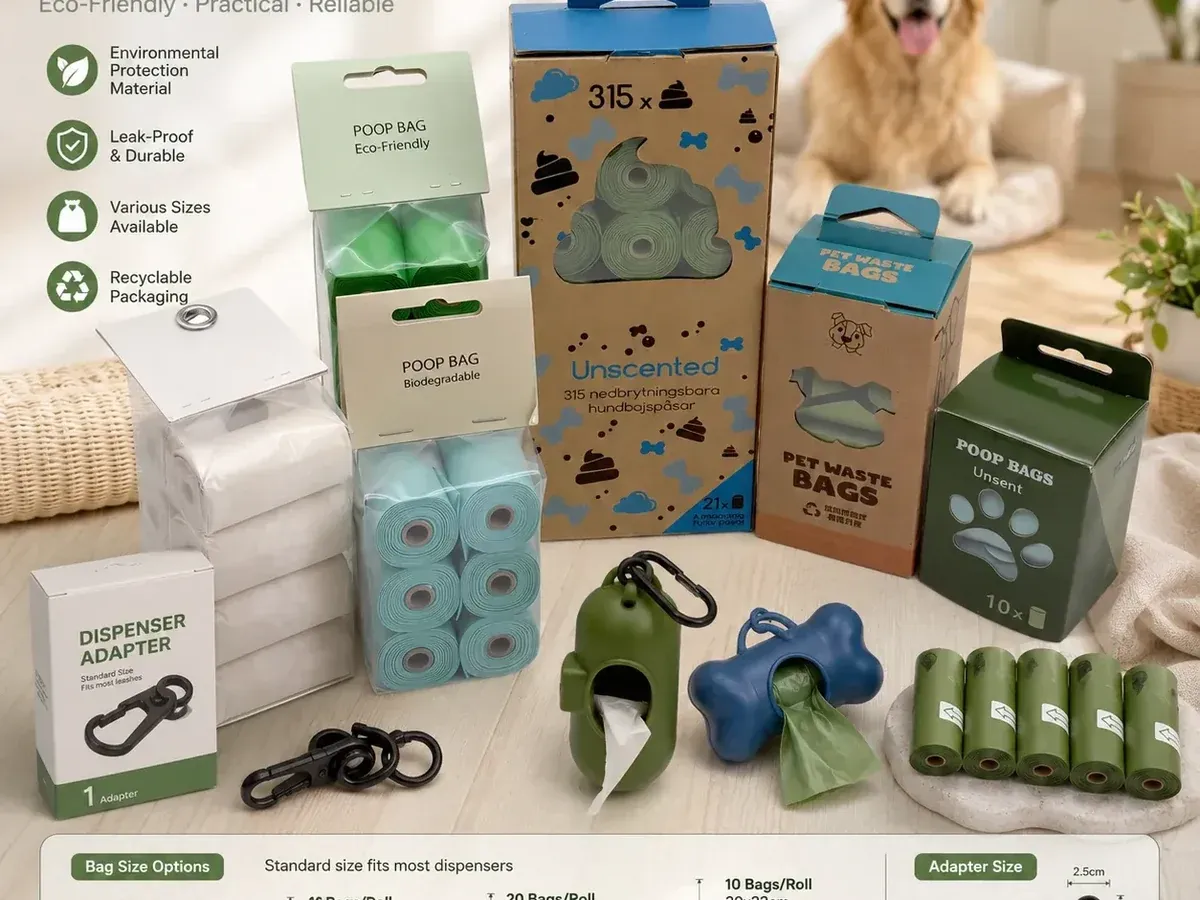
Most private-label dog waste bag projects fail for the same reason: the bag is specified before the dispenser is. The dispenser decides the roll diameter, the core, the bag width and how the bag pulls out — so if you choose the bag first and the dispenser later, you usually end up re-specifying one of them. Start from how the customer will use it and work backwards.
Start from the dispenser, not the bag
If you are supplying a dispenser as well, you have freedom: any bag that suits the dispenser you have chosen will work. If your customers already own dispensers — because you sold them, or because a competitor did — the bag has to fit what is already in the market. That means matching the core diameter, the roll width and the bag length so the roll seats properly and the bag tears off cleanly.
Bag format: which one, and why
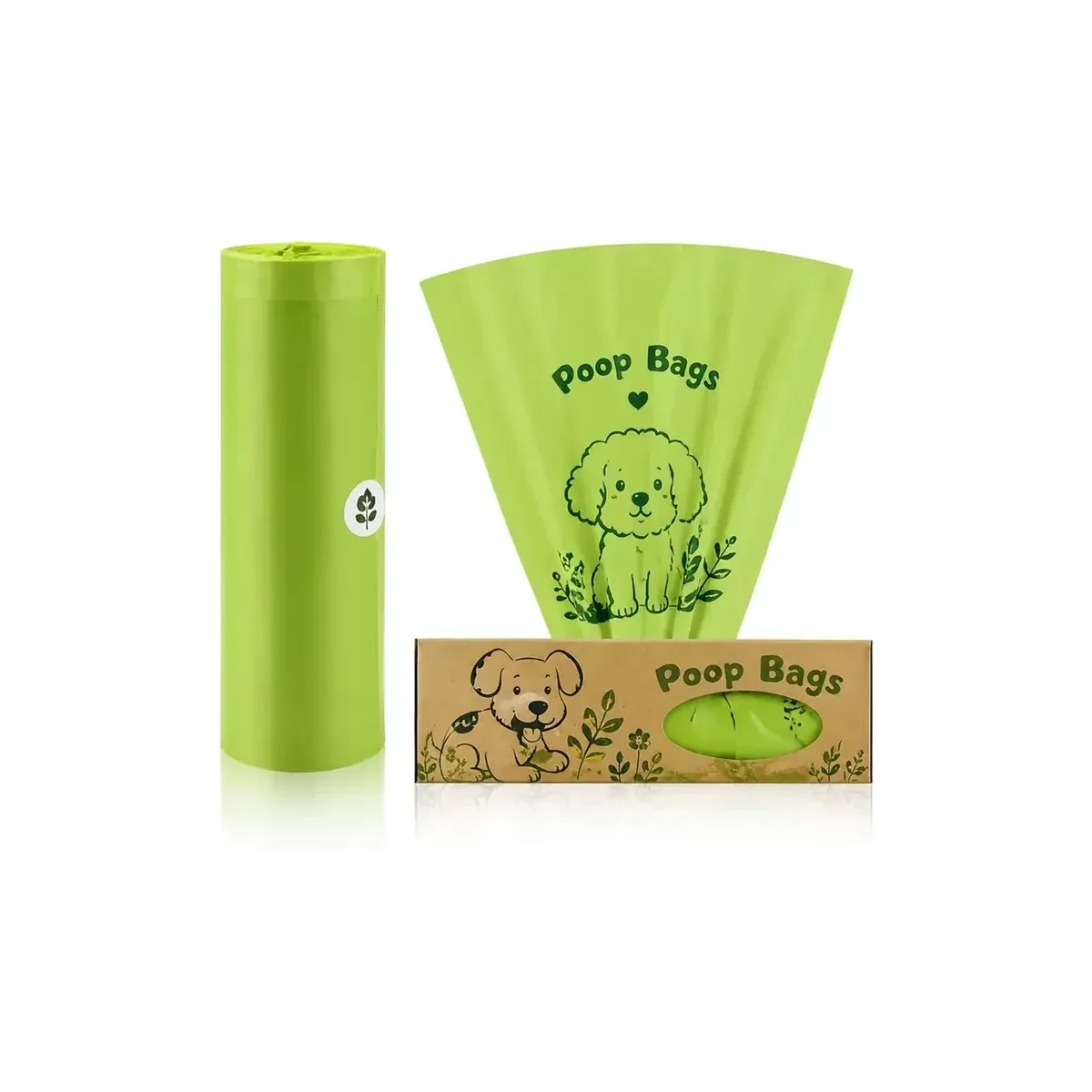
Three formats cover almost the entire category. Flat-top bags are the standard: cheapest to produce, easiest to wind on a roll, and what most dispensers are designed around. Vest-handle bags have integrated handles that tie shut, and they are usually sold as a folded stack rather than a roll. Drawstring bags have a cord that closes the bag and doubles as a carrying handle.
Drawstring is the premium tier. The closing action is easier than tying a knot, and a properly closed drawstring contains odour more reliably than a folded flat-top. The trade-off is cost — drawstring bags cost more to produce, so they normally sit above the standard line rather than replacing it.
Film thickness: what it actually changes
Thickness drives how the bag feels in the hand and how it performs under a heavier load. Below about 15 microns a bag can feel flimsy enough that customers complain, particularly with large dogs. Above roughly 25 microns it feels substantial but you are paying for material that most buyers will not notice. The middle of that range is where most retail programmes sit.
Thickness also interacts with material claims. Compostable film is certified at a maximum thickness, so a thicker bag may fall outside the certification and lose the claim entirely. If you want both a heavy bag and a compostable claim, check the limit before you specify.
Material: PE, recycled PE or compostable
Polyethylene is still the standard because it is strong at low film weights, resists tearing when pulled from a dispenser, and takes print cleanly. Recycled PE suits programmes with a recycled-content message. Compostable film suits eco-positioned ranges, but it behaves differently in production and in use, and it carries certification the packaging wording has to match.
Roll count, pack count and core
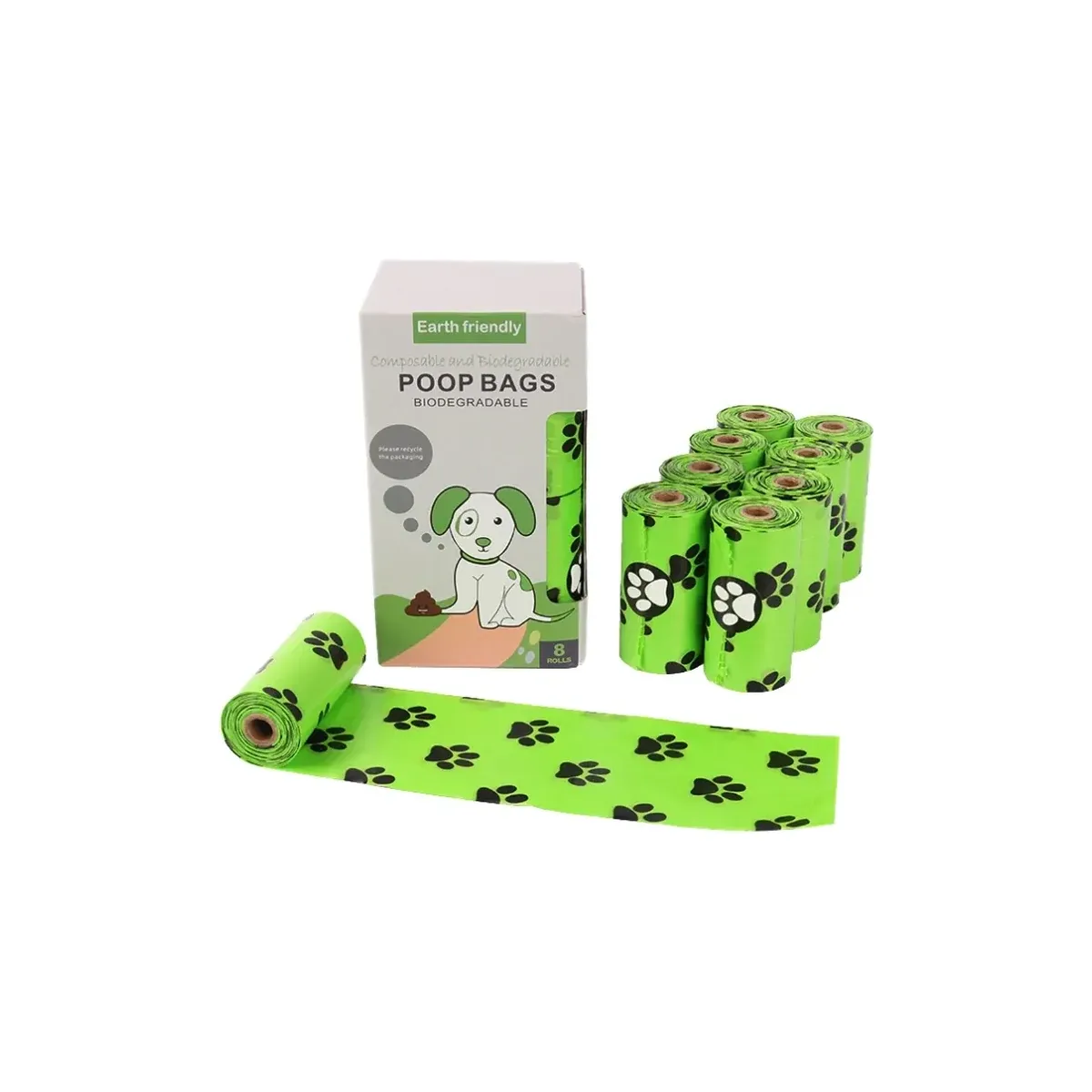
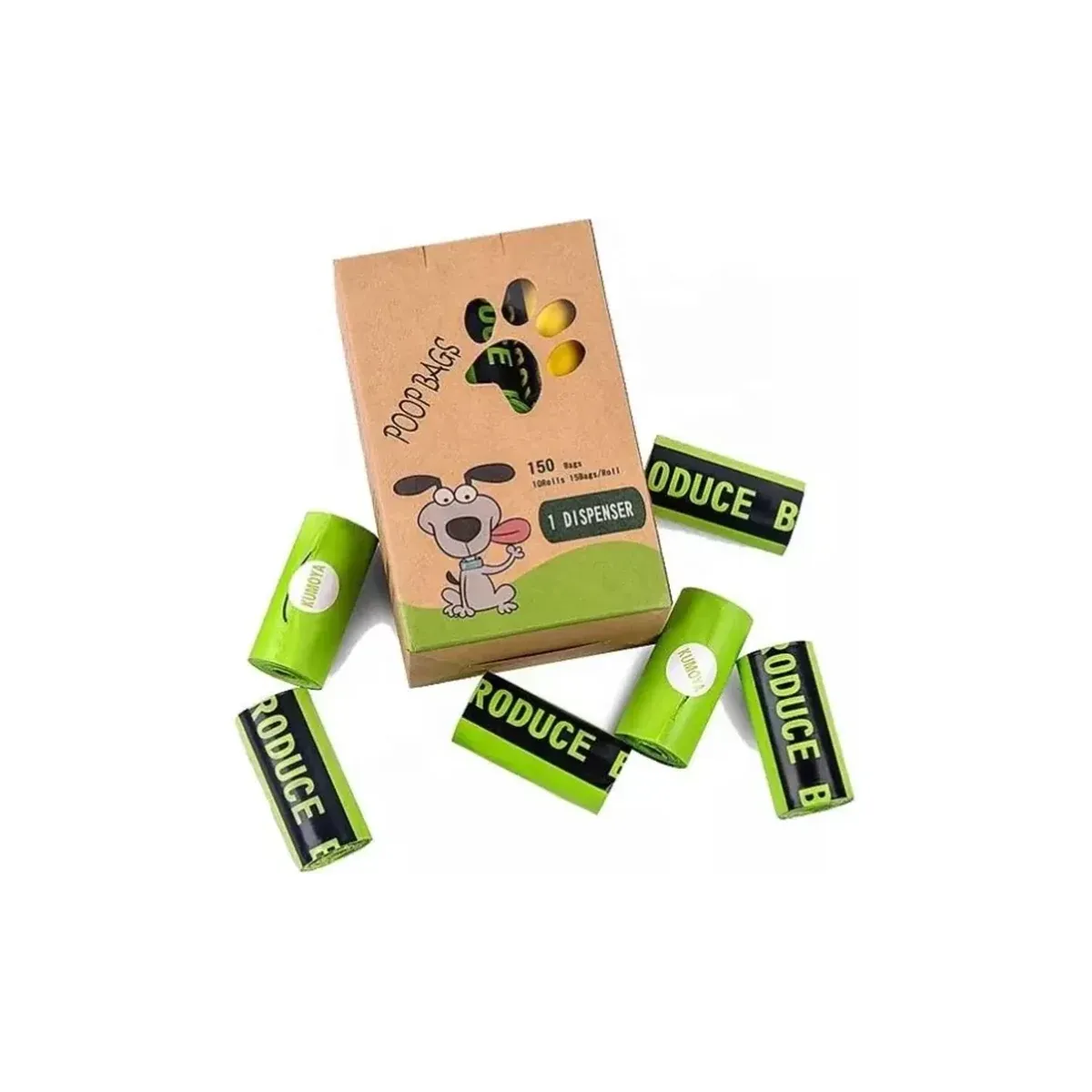
Fifteen bags per roll is the most common configuration, and rolls per pack usually run from eight to fifteen. Both are worth confirming against what is already on your target shelf — an odd count is harder to position than a slightly different price. The core matters too: paper, plastic and coreless rolls behave differently in a dispenser, and coreless rolls need a dispenser that supports the roll from the sides.
What to check on a pre-production sample
Before authorising a production run, check the things that are expensive to fix later: bag dimensions against the dispenser, film thickness against the specification, the seal strength at the base, where the perforation sits and whether it tears cleanly, print registration and colour, and the roll diameter when wound. Pull ten bags in a row from a loaded dispenser — if one tears wrong, the perforation needs adjusting.
Talk to MIRICO
Email carol@rdypackaging.com or call +86 153 6388 5006 with your bag format, packaging direction and estimated first order quantity, and we will come back with a specification and a quotation.